Computer Art on the Teletype Model 33
The Machine
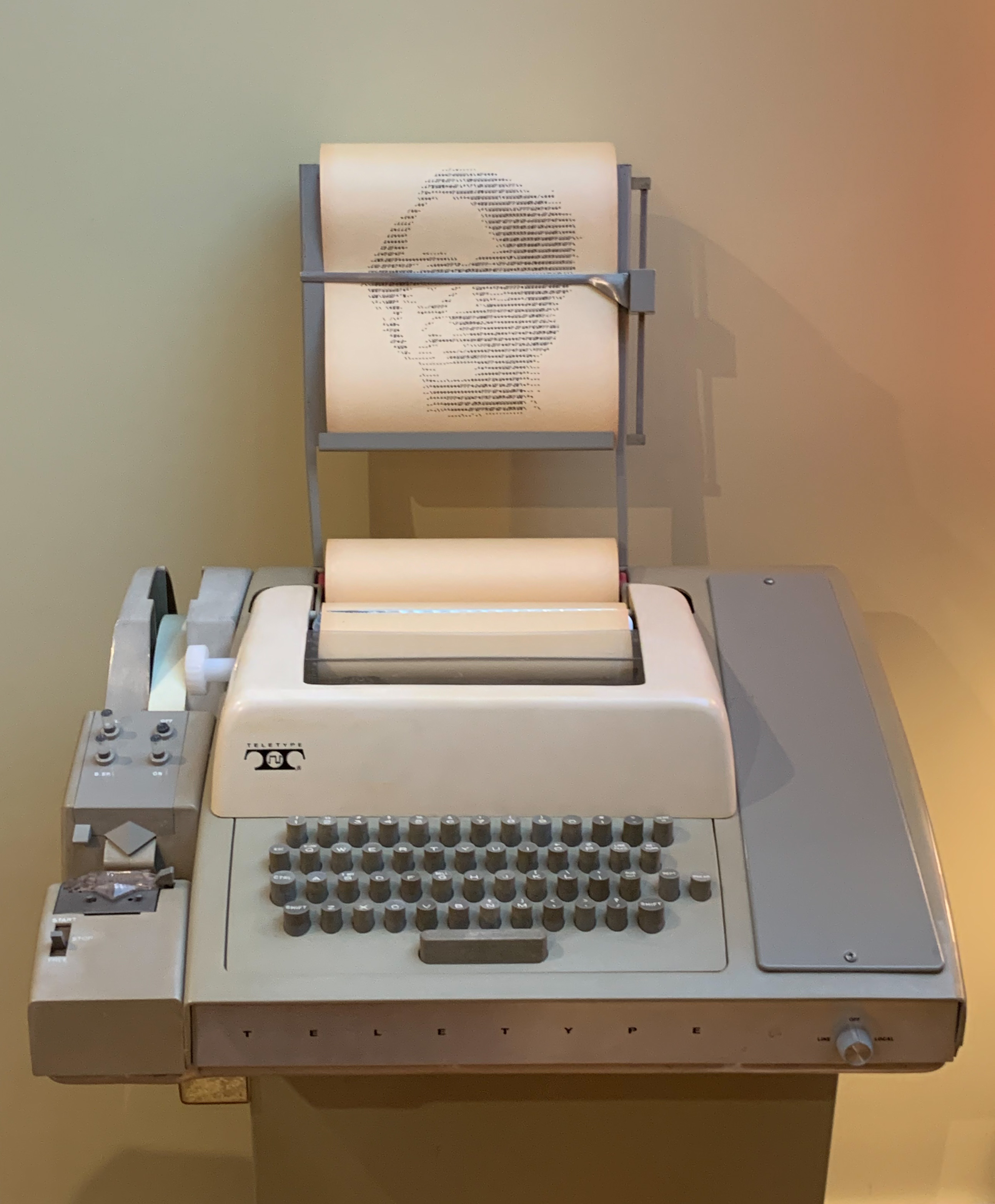
The Teletype Model 33 was the most widely used computer terminal of the late 1960s and early 1970s. An electromechanical device with a keyboard and a printer, it became the standard interface for minicomputers such as the DEC PDP-8 and PDP-11, for time-sharing systems, and for the first personal computers.
The teletype forms one of the crucial links between the typewriter, telegraph communications,
and our digital age. The ASCII character set was designed around it. Unix was developed on
one. Its data formats are embedded in every modern operating system: when you open a terminal
window today, its name (/dev/tty) is short for “teletype.”
The Model 33 prints uppercase letters, numbers, and a limited set of punctuation — no lowercase, no graphics characters, no color — onto continuous-roll paper at ten characters per second. A full-page image takes over fifteen minutes to print. The machine is loud, mechanical, and deeply tactile.
Overstrike
Because the Model 33 prints on paper, it can do something a screen cannot: it can type a line, return the carriage without advancing the paper, and type over the same line again. By printing two or more characters in the same position, you can layer ink to create textures, tones, and densities that no single character could produce.
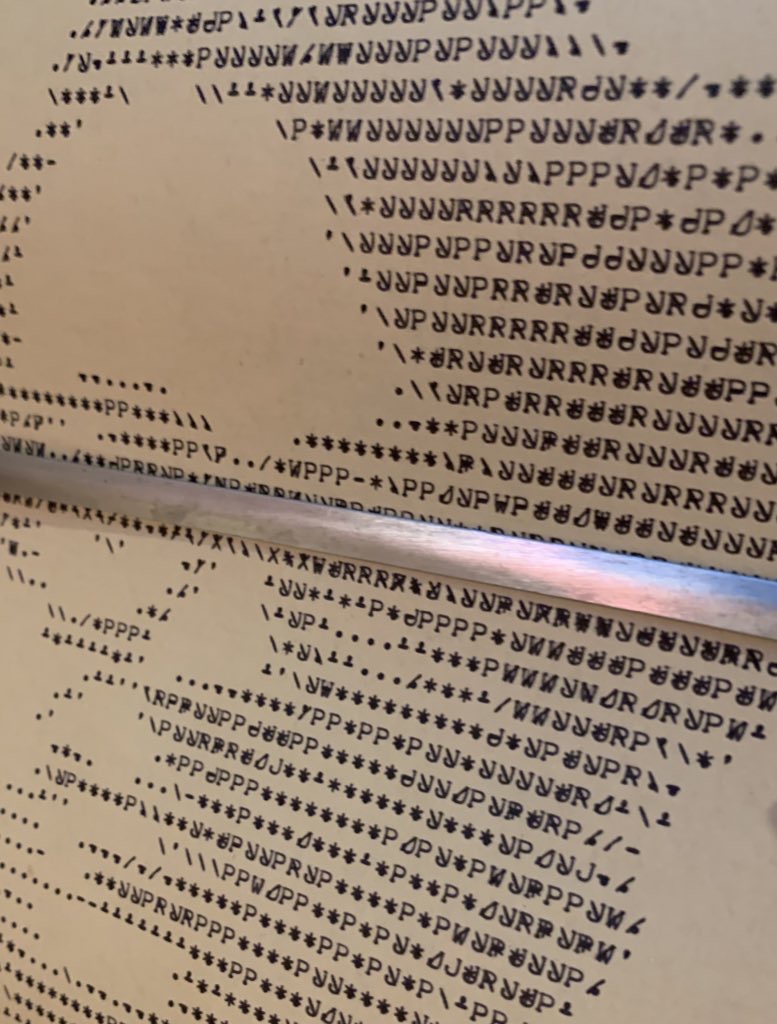
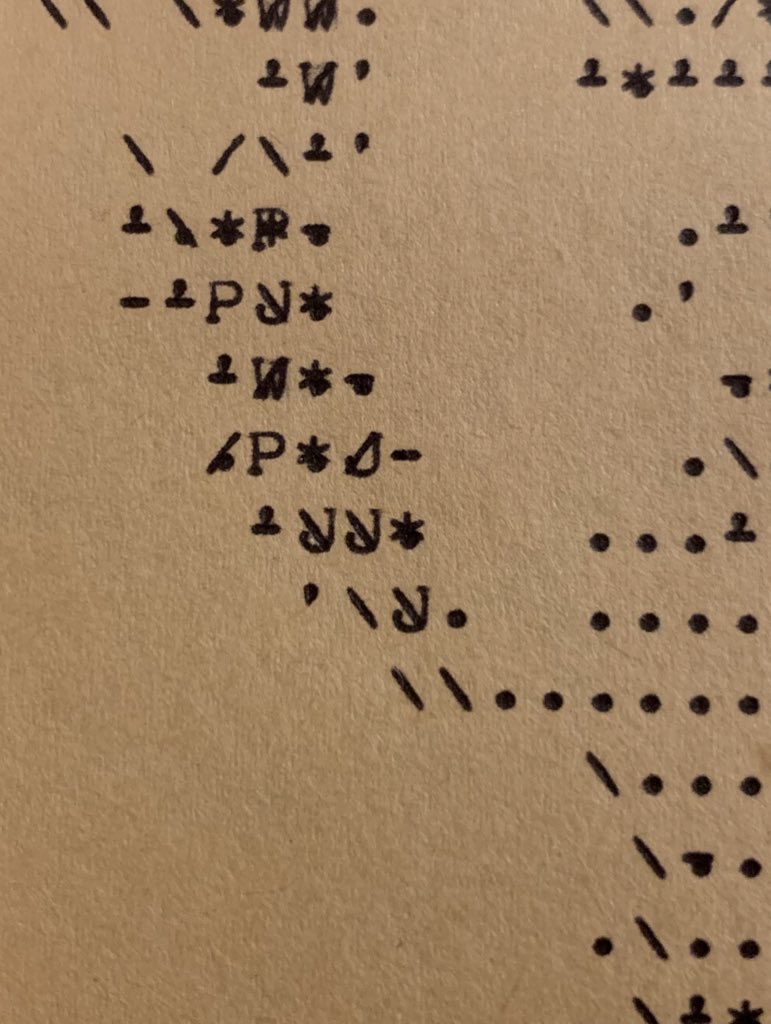
This overstrike technique was used in the 1960s and 70s for everything from crude shading to surprisingly detailed portraits. Samuel Harbison, working at Princeton in the early 1970s, pioneered overstrike artwork on lineprinters. The famous overstrike Mona Lisa circulated on DECUS tapes among minicomputer users. But overstrike also found its way into fine art.
ART 1: A Computer Program for Artists
In the late 1960s, Katherine Nash, a sculptor at the University of Minnesota, and Richard H. Williams, a computer scientist, created ART 1 — a generative program designed to be used by artists, not programmers. Published in the journal Leonardo in 1970, ART 1 allowed an artist to define a small vocabulary of characters and a set of rules for their arrangement, then let the computer compose an image on the lineprinter.
The program was deliberately simple. The artist chose which characters to use, controlled spacing and repetition, and could specify rules for how patterns would evolve across the page. Nash and her collaborators, including Frederick Hammersley, used ART 1 to explore the boundary between intention and chance — the artist sets the constraints, and the machine fills in the field.
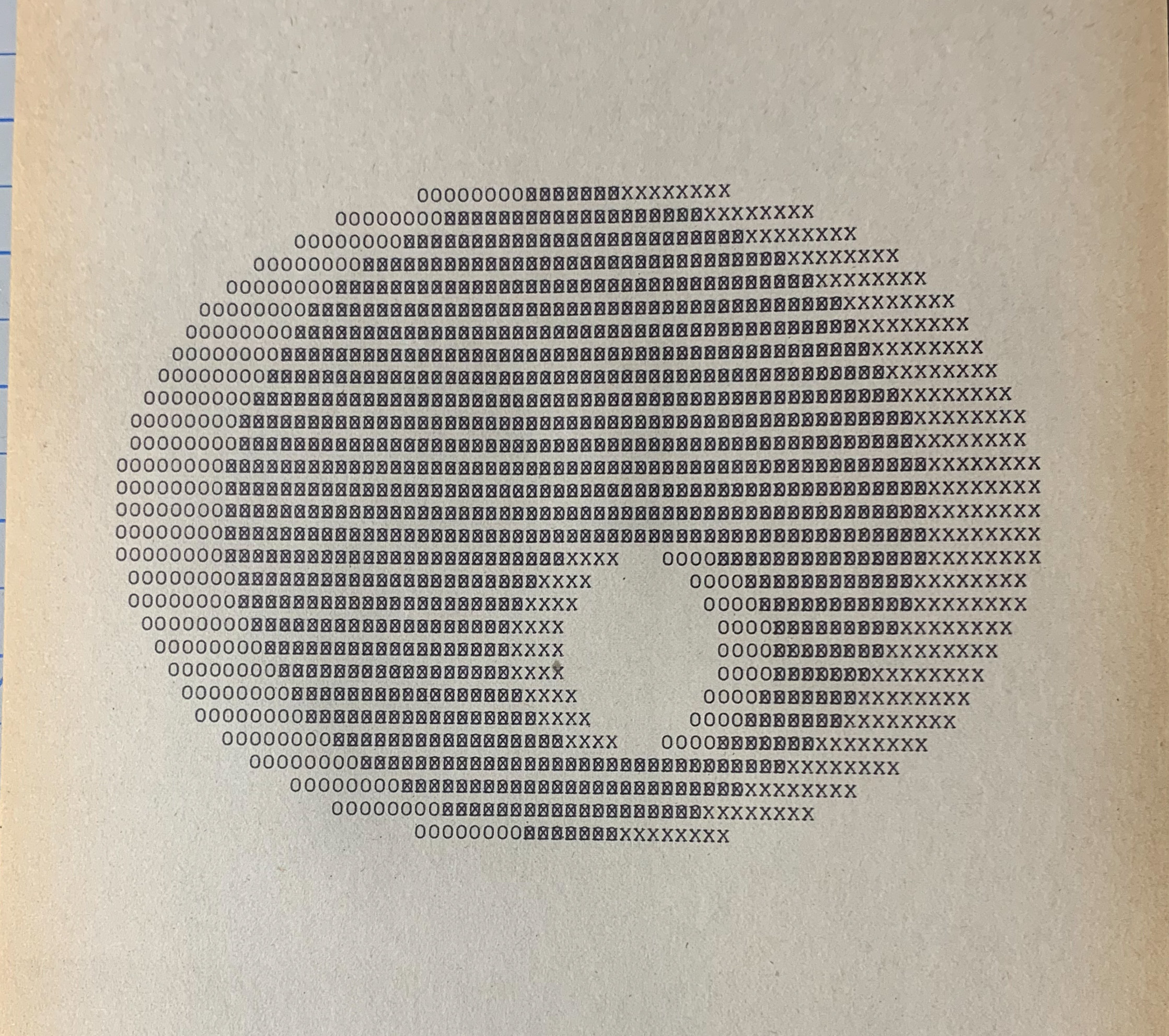
The works shown here were originally generated with ART 1, and recreated for the Teletype Model 33, matching the original output medium as closely as possible.
Spheroids — Katherine Nash
Frederick Hammersley
Frederick Hammersley (1919–2009) was a painter associated with hard-edge abstraction and geometric painting in postwar Los Angeles. In the late 1960s, he began working with computers at the University of New Mexico, using programs like ART 1 to generate compositions on a lineprinter.
A Good Line Is Hard to Beat
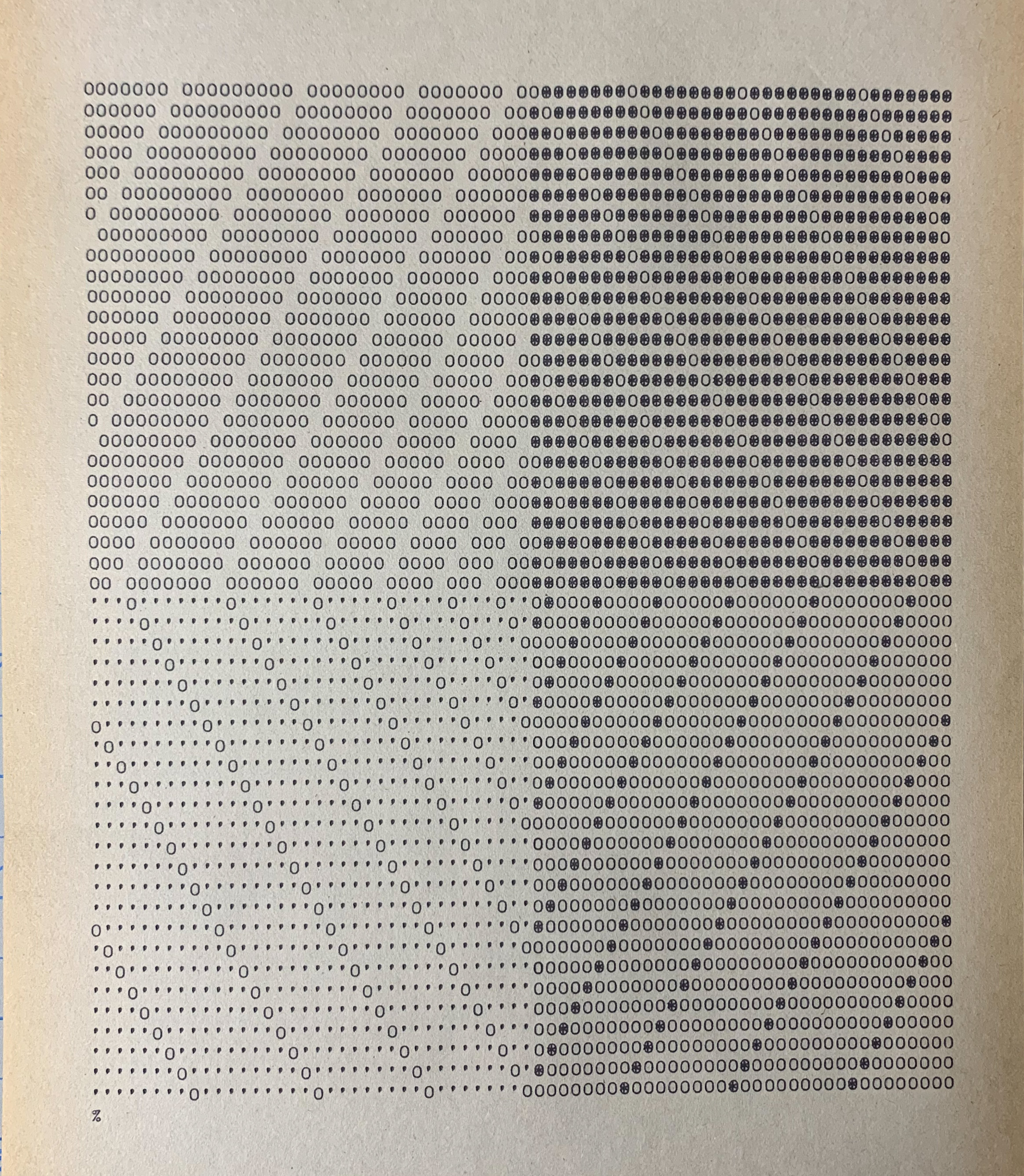
Tiddly-Winks
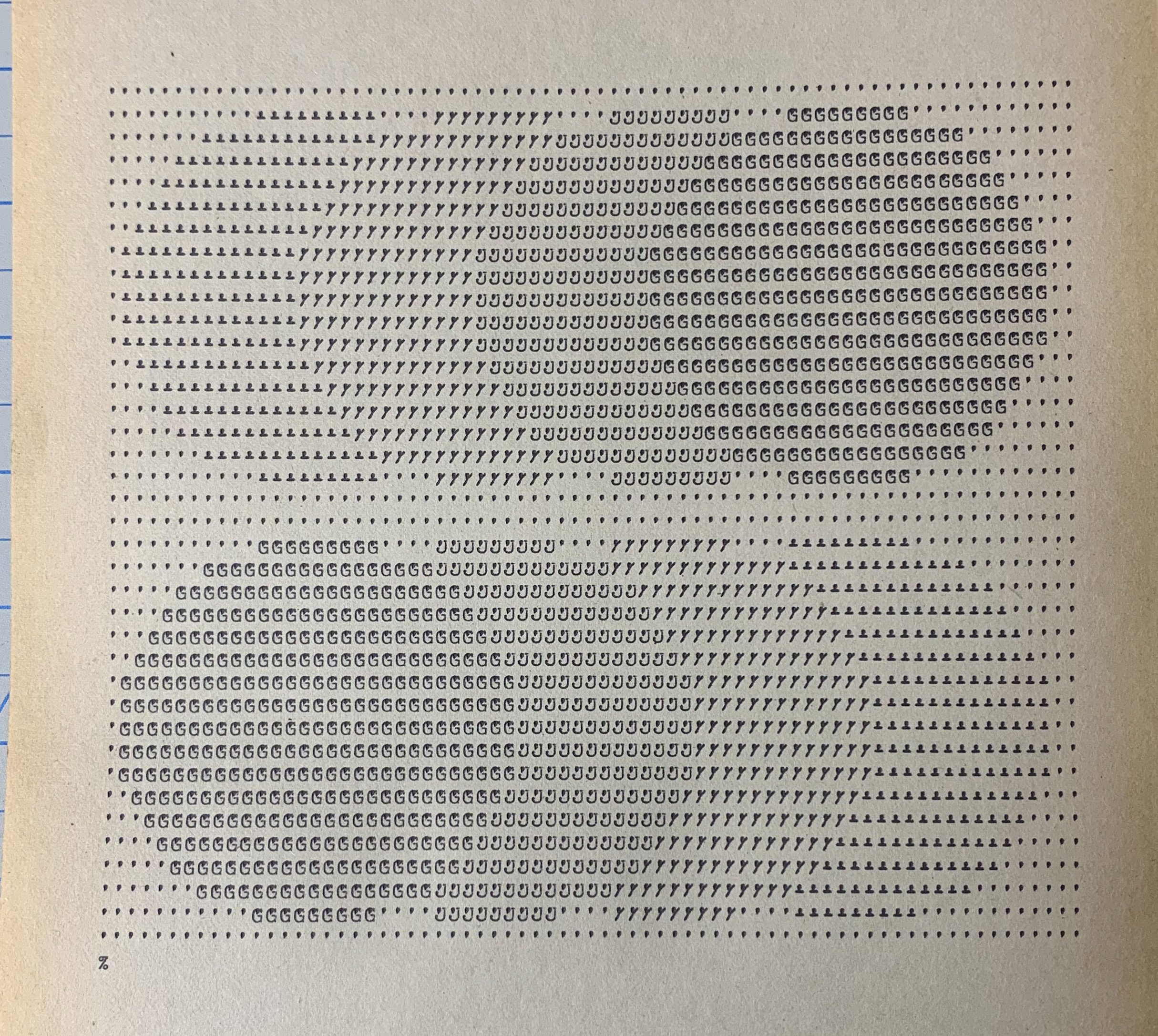
Jelly Centers
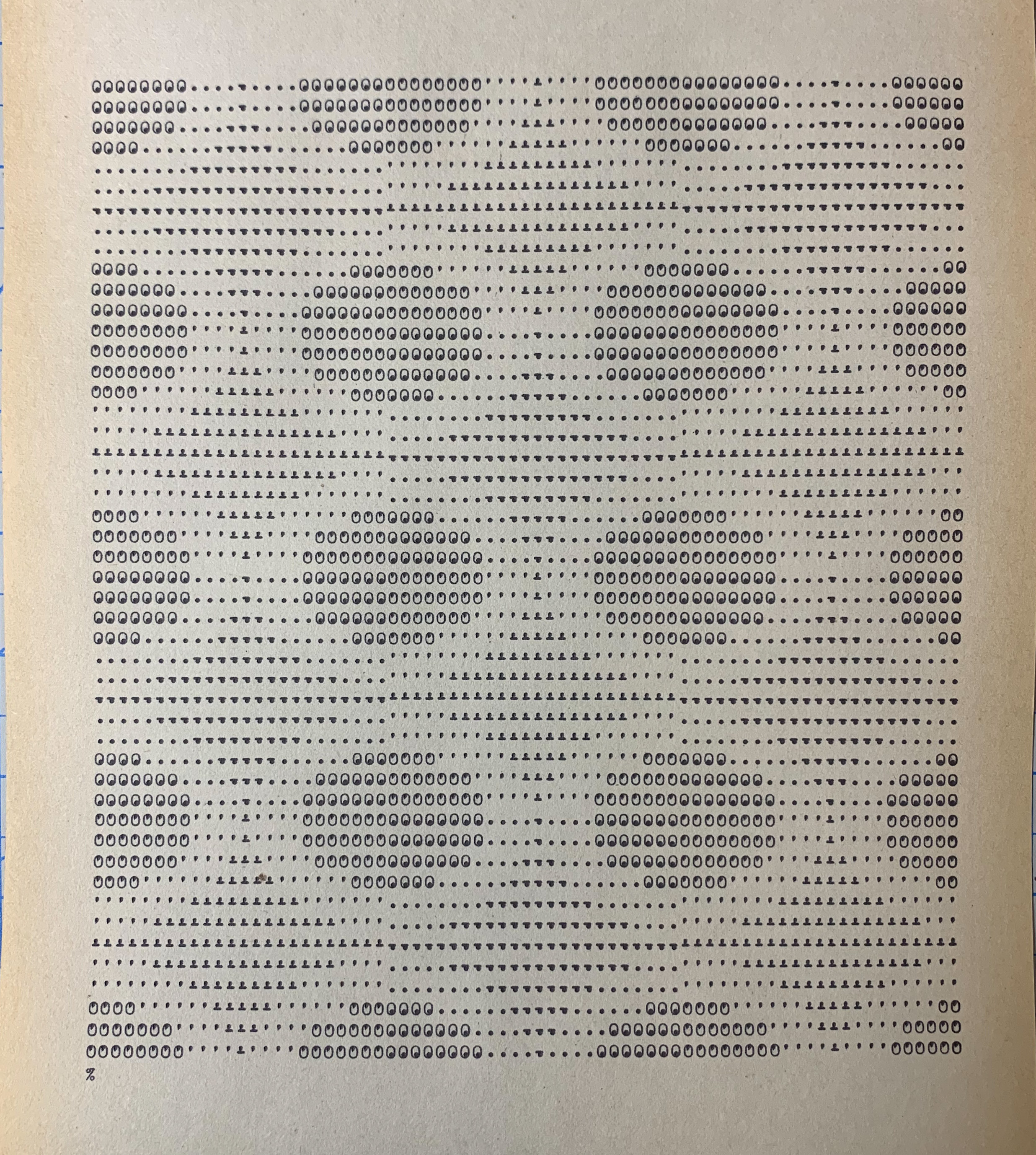
Emoji
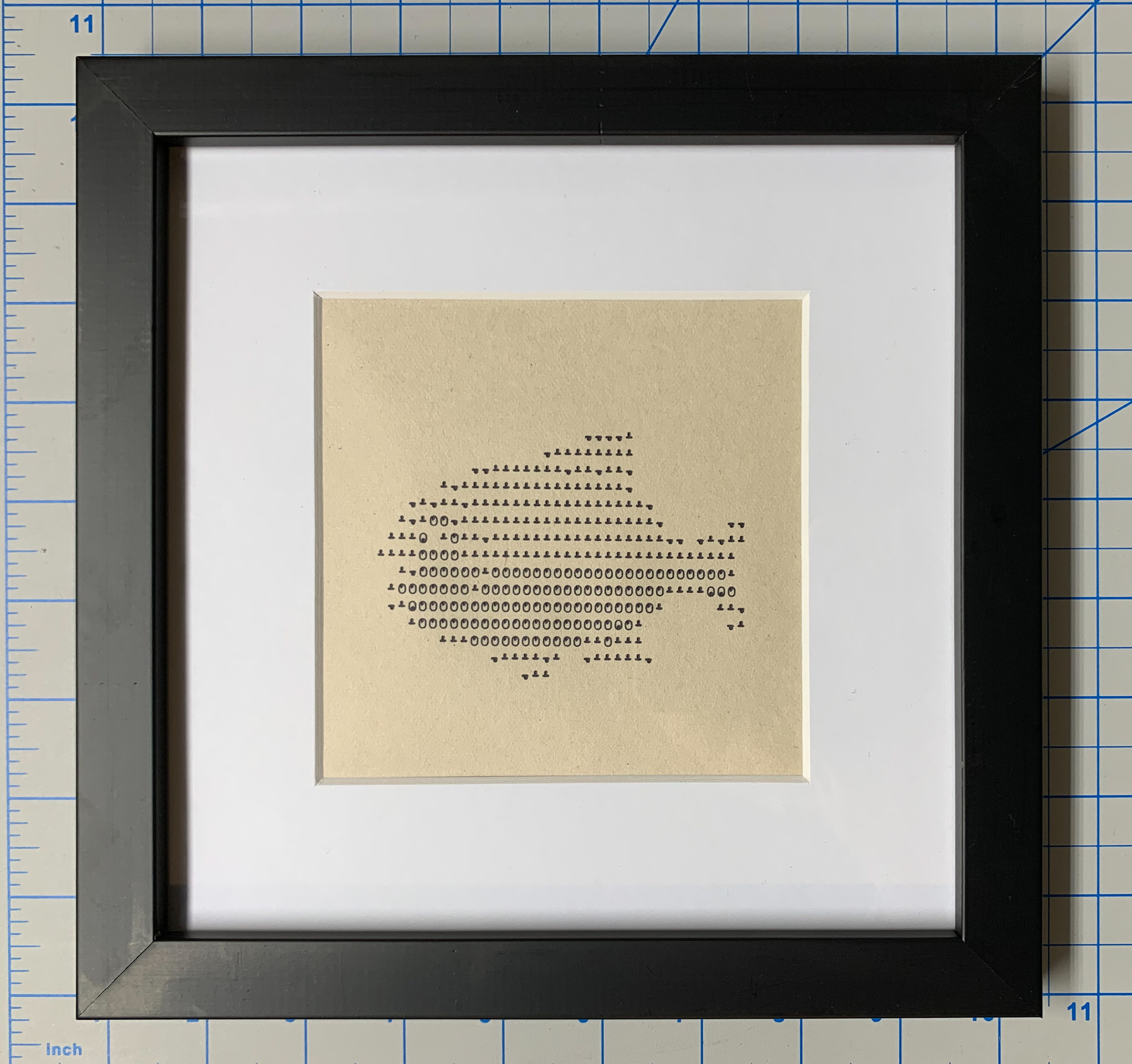
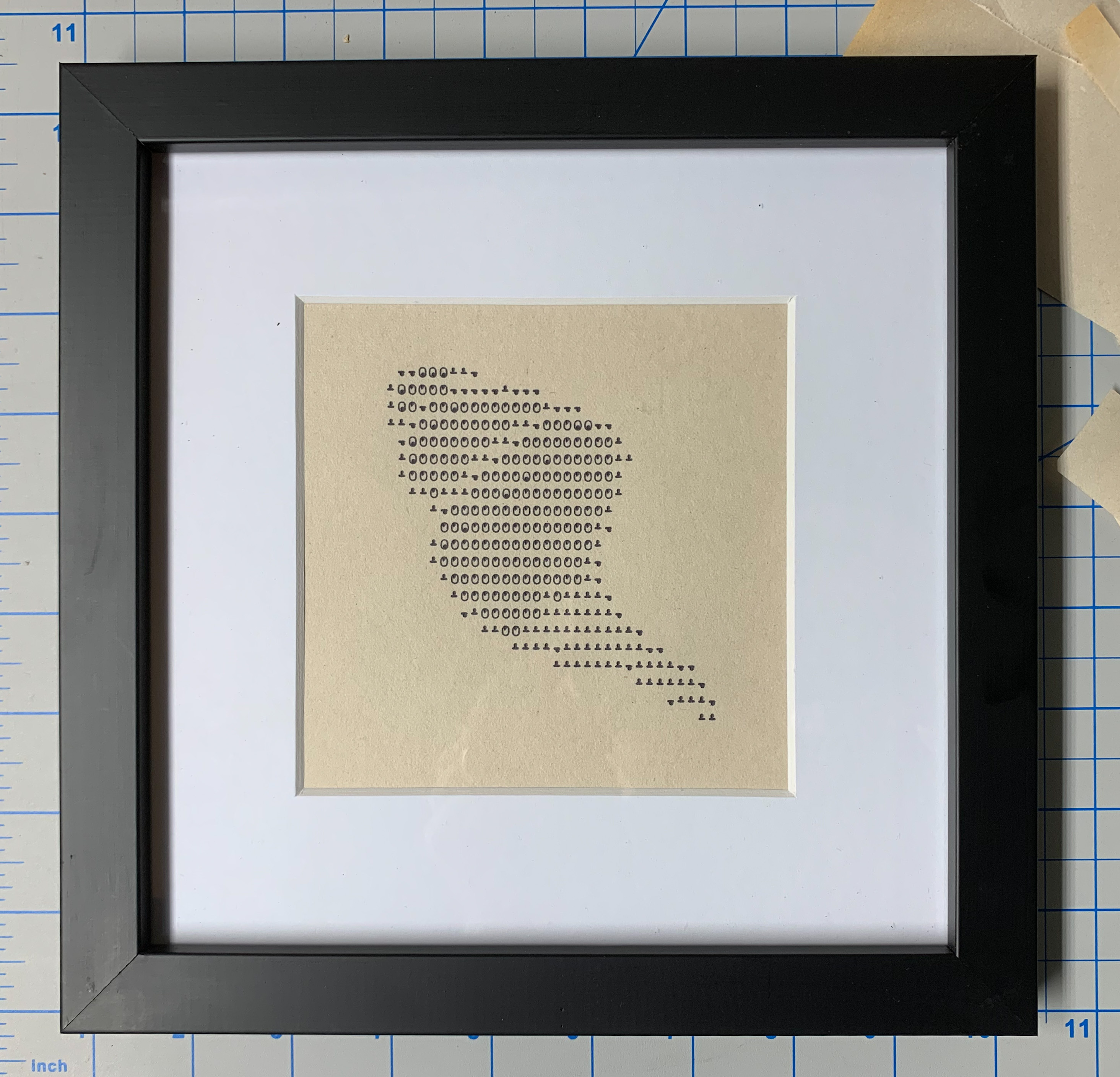
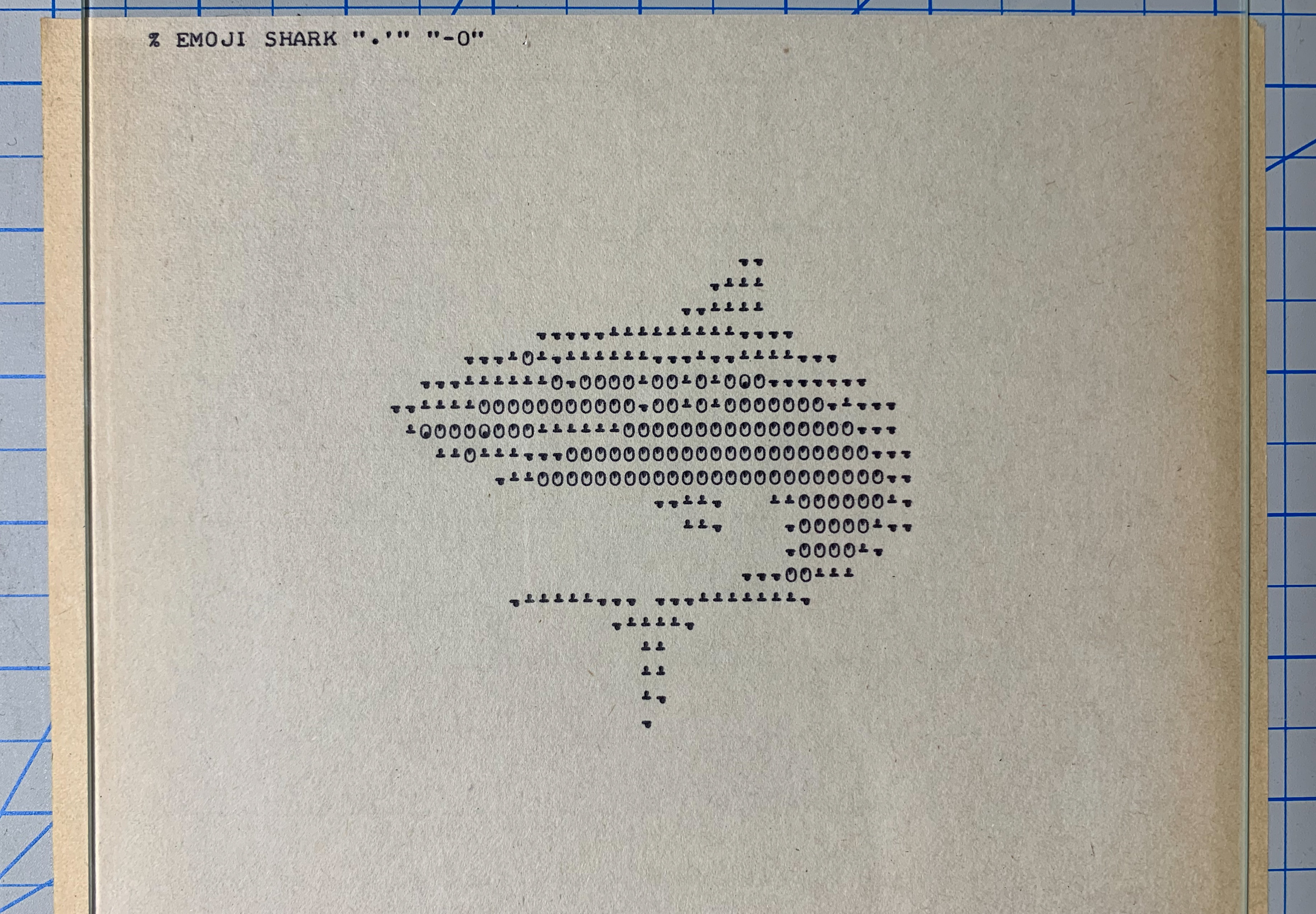
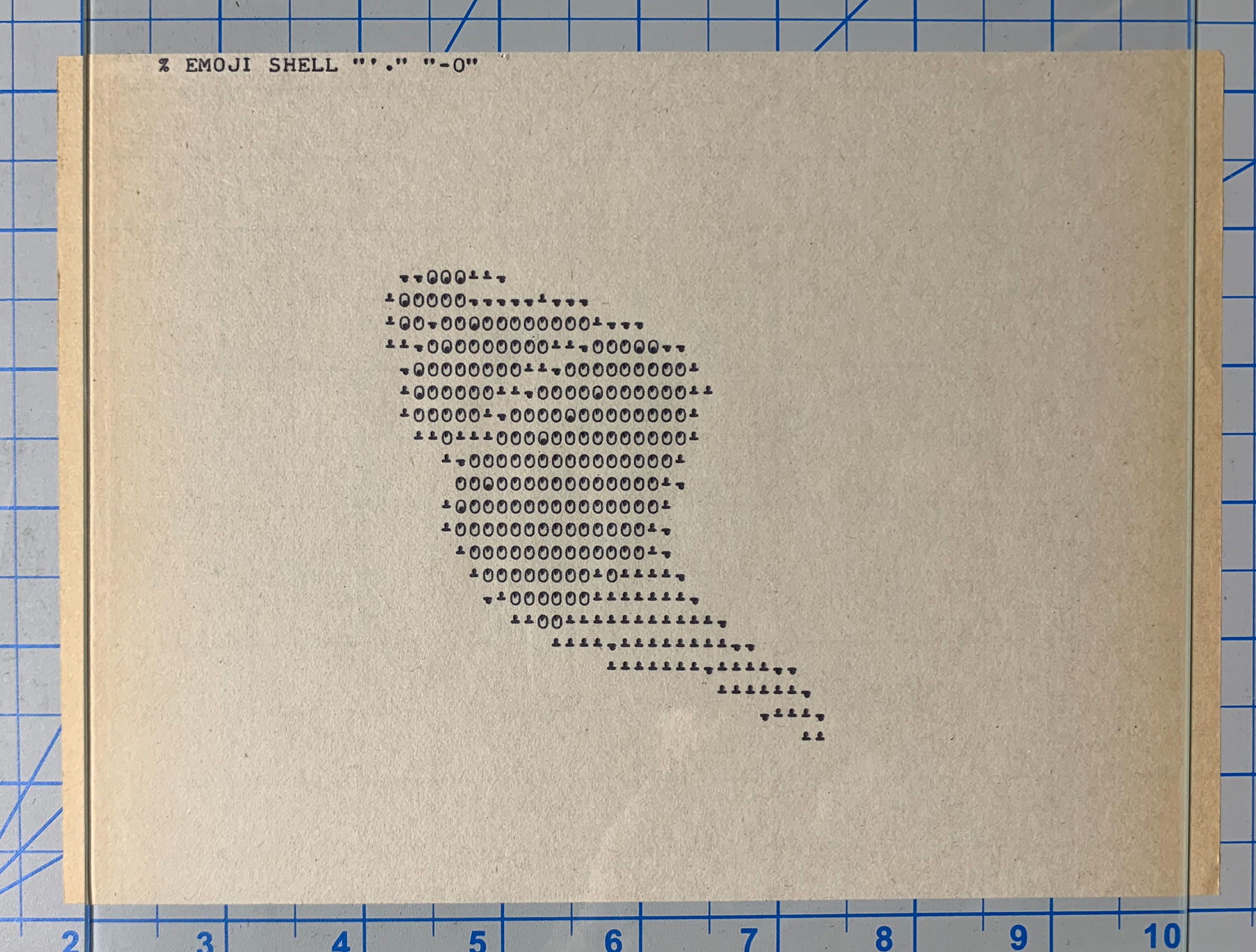
These works use the same overstrike techniques, but applied to a contemporary subject: emoji. A source image — the familiar, colorful pictograph from a phone screen — is converted to grayscale, analyzed for luminance and edge orientation, and matched against a table of all possible two-character overstrike combinations. The result is printed on the Teletype as a large-format image built entirely from uppercase letters and punctuation.
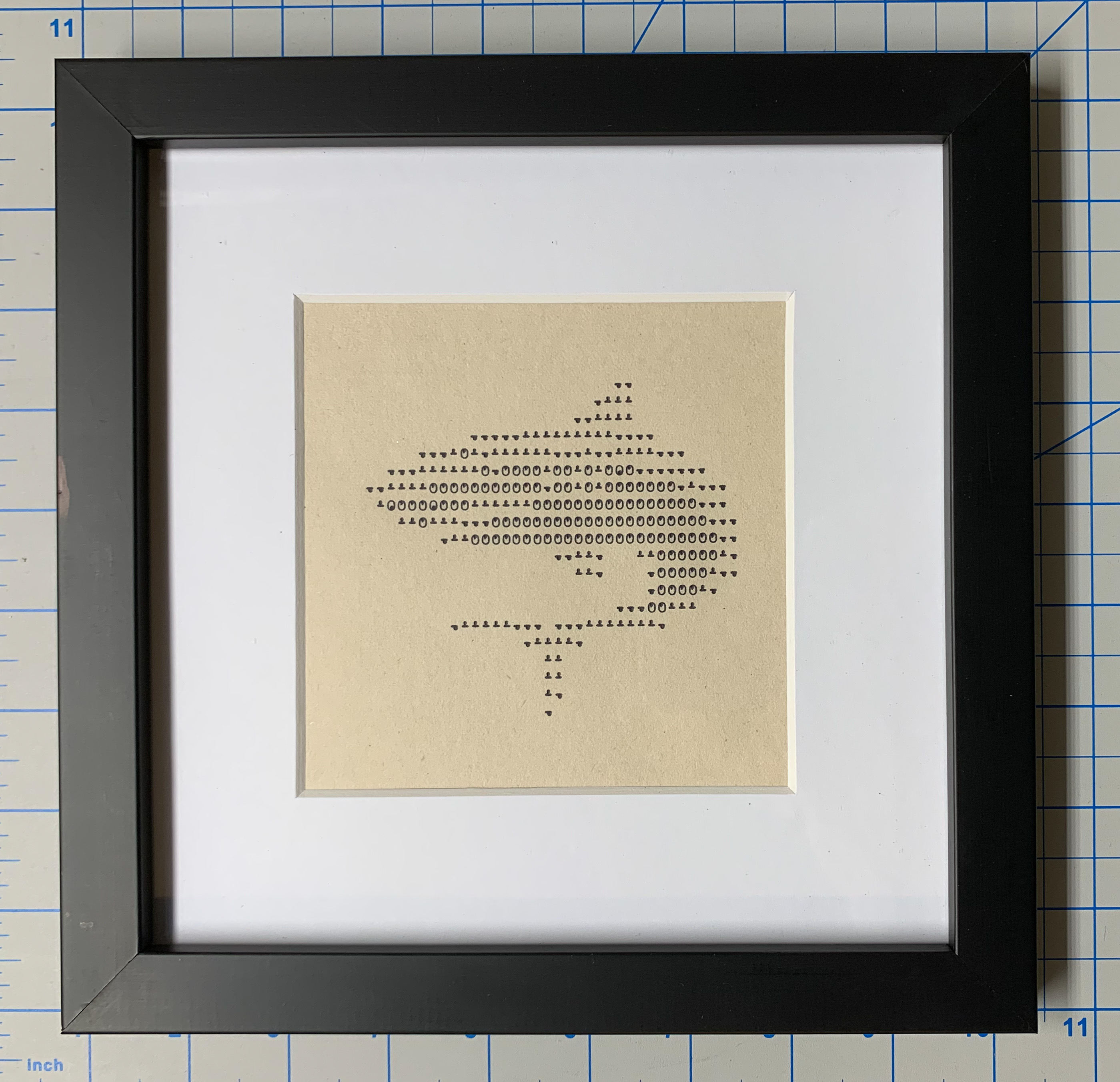
Terminal Emulator
Access to a physical Teletype is not widely available. Most of the experience can be had with a software emulator.
The Hermes Agent has a Teletype dashboard theme with a fully functional emulator, including overstrike support and sounds captured with an Ambisonic microphone. It connects to any AI model, so you can chat online with the LLM.
About
All works were printed on a Teletype Model 33 ASR terminal, manufactured circa 1969, connected via a custom USB interface to a Raspberry Pi running Linux. The ART 1 recreations were generated using a JavaScript reimplementation of Nash and Williams’ original FORTRAN program. The emoji and portrait prints were produced using custom Python software that analyzes images and maps them to overstrike character combinations.
References
Katherine Nash and Richard H. Williams, “Computer Program for Artists: ART 1,” Leonardo, vol. 3, no. 4 (1970), pp. 439–442.
Patrick Frank, ed., Sharing Code: Art, Machine, and Community in the Work of Frederick Hammersley (Albuquerque: University of New Mexico Press).
Hugh Pyle, ASR33 documentation and source code (GitHub).
Sher Minn Chong and Hugh Pyle, ART 1 recreation (GitHub).
Hugh Pyle, Hermes skills — Teletype emulator (GitHub).